If you’re looking for an Austin wedding film photographer, chances are you’ve fallen for the look of film. Its depth. Its blend of softness with grain. The way it renders light. I’ve been shooting film for the last eight years, and it’s a big part of how I document every wedding day. But film is a medium and a tool, not a singular style or aesthetic. It all depends on the photographer’s approach and the choices they make with the tools they have.
So I want to take you behind the scenes of mine. Here’s when I reach for film, how I make it look bright, creamy, and true to color, and why I shoot both film and digital at your wedding.
I’m covering:
- Why I shoot both film and digital at your wedding
- Which moments of your day I capture on film
- How I get film that looks true to color
- The film stock and camera I use, and why
- How film changes the way I work on your wedding day
- What to ask when you’re looking for an Austin wedding film photographer
- FAQs about film wedding photography

Film vs. Digital Wedding Photos: Why I Shoot Both
I value film’s depth, its blend of softness with grain, and the way it renders light. I also value digital’s flexibility, reliability, and speed when the day is moving fast. Each one brings something meaningful to your gallery.
What I don’t want is for your gallery to feel like two different aesthetics competing with each other. I incorporate each medium into my approach so they work together to seamlessly tell a single story with one unified artistic vision.
Film can interpret a moment in a way that feels emotionally resonant, and that’s something I try to emulate in my digital images. Digital can feel overly crisp and processed and can lose some of the connection to emotion in the moments if we’re not careful. Bringing that same feeling into my digital work is what lets your full gallery read as one story from start to finish.


Which Moments of Your Wedding Day I Capture on Film
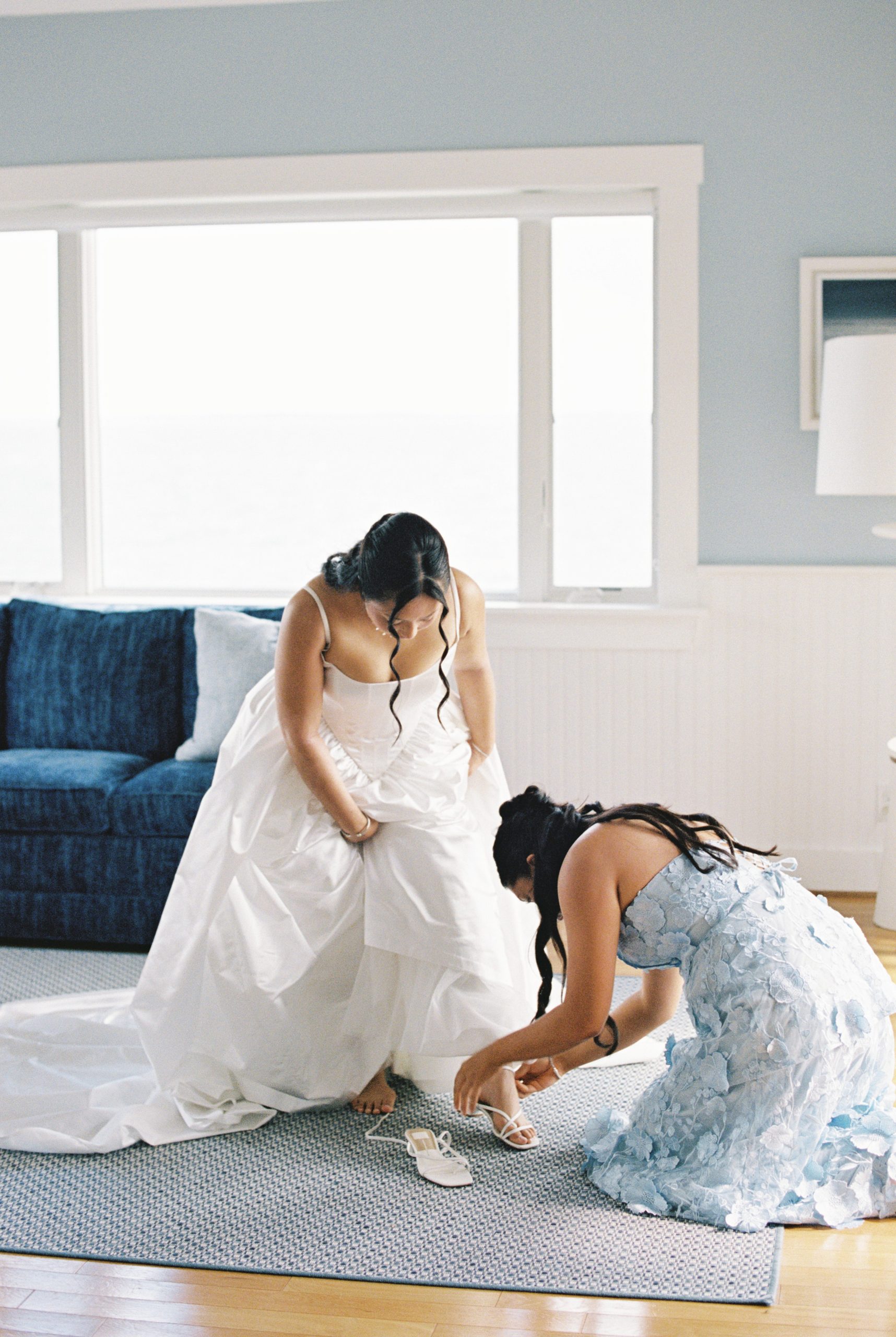
I use film alongside my digital camera throughout most of your wedding day until the sun goes down, light and timeline permitting. On a day with plentiful sunshine, like we so often have in the Texas Hill Country, I’ll incorporate film during:
- Getting ready
- Couple’s portraits
- Wedding party portraits
- The ceremony (light permitting)
- Cocktail hour
- First dance and toasts
- Details
I love to set the scene with film images, document emotional moments and connections, and preserve small details like hand squeezes and reception decor on film.
I generally document family portraits, especially large extended groups, digitally. It helps with blinking and efficiency, so we can move through your family list and get you back to your celebration.
Once the sun sets, I may finish a roll with some direct flash, but I generally transition to my digital Sony a7v since it does so well in low-light situations.


How I Get Film That Looks Bright, Creamy, and True to Color
Film loves light! Over the last eight years of shooting film, I’ve learned that unlike digital images, it’s better to overexpose film by a stop or two. This allows for the most flexibility in matching my style when the film is developed.
One of the most important things for achieving the style I want in my film is partnering with a great professional film lab that communicates well and helps fine-tune my images over time. I’ve been sending my film to Photovision for the last several years, and working with them consistently has allowed me to achieve the look I want with consistency and confidence.


Keeping Film Sharp During the In-Between Moments
Getting sharp, in-focus film images, especially during candid, in-between moments, is about knowing my gear and being technically proficient. It’s also about knowing how to anticipate moments before they happen, so I’m ready to click the shutter as they unfold. That comes with years of experience and staying deeply tuned into the emotions of the day.
But the beauty of film is that sometimes the images are a little soft and extra grainy, and they’re still beautiful. I use my judgment when curating your gallery and deciding what to deliver. Sometimes a moment captured, while technically imperfect, was emotionally powerful enough to stay. It may even become more interesting because of the filmy imperfections.

The Film Stock and Camera I Use (and Why)
My favorite film stock, and the one I use almost solely, is Kodak Portra 400. It has a natural warmth that does a great job of capturing skin tones, but it’s more neutrally color balanced than Kodak Gold, which tends to lean heavily yellow and look more vintage than the clean, true-to-color edits I prefer.
A film speed of 400 means it does well in naturally lit getting-ready and reception rooms and on cloudy days with less light, but it also has a softer grain than higher film speeds. I like that balance of flexibility in when I can use the film and the quality it delivers.
I shoot on a 35mm Nikon F6 film camera, and 35mm film tends to be naturally grainier than medium format. Keeping the film speed lower helps me find that happy medium where the grain is present and noticeable, but still soft enough to not be overpowering.


How Film Changes the Way I Work on Your Wedding Day
Film slows me down and helps me be more intentional. I use an external light meter to properly expose the film. That extra step, along with the pauses that come from reloading every 36 images, forces me to slow down a bit and really stay tuned into the moments happening around me.
Plus, a photographer’s investment in film is real. Each 35mm roll costs about $55 between the roll itself and its development. Shooting film has helped me be more observant and thoughtful in my compositions, and to stop overshooting and delivering images that are virtually exactly the same. For you, that means a gallery full of thoughtful, intentional images.
For comparison, medium format cameras offer 16 or 20 frames per roll and require manual rewinding, so switching rolls happens more often and takes a little longer each time. I do have friends who have gotten quite fast at it!


What to Ask When You’re Looking for an Austin Wedding Film Photographer
Film is a medium and a tool photographers use to document moments. It is not a singular style or aesthetic. Film can look contrasty from pops of direct flash on a dark dance floor, grainy from a higher film speed in a low-light setting, soft and romantic in daylight portraits, or crisp and bright.
Different film stocks and cameras produce different results, too. Polaroid and disposable cameras have made a comeback on wedding days, and those tend to produce a darker, sometimes vintage, fuzzy feel. A 35mm or medium format camera gives a photographer a lot more options for creating images that are soft and creamy, sometimes fuzzy and full of grain, but also beautifully lit and more crisp.
Not every photographer who uses film makes the same choices or treats its development in the same way. So instead of only asking “Do you shoot film?”, follow up with questions like:
- How do your film images look in comparison to your digital images?
- Can I see examples of both in a full wedding gallery?
- Which moments of the day do you usually capture on film?

FAQs About Film Wedding Photography
Will my film and digital photos look different in my gallery?
Each medium brings something a little different, but they shouldn’t feel like two aesthetics competing with each other. I incorporate both so they work together to tell a single story with one unified artistic vision, and I try to emulate the emotional feel of film in my digital images.
Is film photography worth it for a wedding?
For me, film brings a depth, softness, and way of rendering light that feels emotionally resonant. It also slows me down and helps me be more intentional with every frame. If you love that timeless feel, film is a beautiful way to preserve your day.
Are there Hill Country wedding venues that are ideal for film photography?
Film loves light, so venues with plenty of natural light are a dream: outdoor ceremony sites, getting-ready suites with big windows, and receptions that start before sunset. Couples often ask if I’ve shot at their venue before, but knowing how to read the light matters more than the venue itself.
Can I hire an Austin wedding film photographer for a destination wedding?
Yes. I’m based in the Austin area and photograph weddings throughout the Texas Hill Country, and I still shoot many weddings in New England. If you’re planning a wedding weekend somewhere else, I’d love to hear about it.

Let’s Talk About Your Wedding
If you’ve been dreaming about film for your wedding and want a photographer who shoots both film and digital with intention, I’d love to hear about your plans. Whether you’re celebrating in the Texas Hill Country or planning full wedding weekend coverage closer to downtown, you can explore my offerings here and reach out to set up a video call. I love when both of you can join! Bring your questions, your vision, and your planner’s timeline, and we’ll talk through how to capture your day in a way that feels timeless, present, and personal.

ABOUT LYNNE
Lynne Reznick is a wedding photographer serving Austin, the Texas Hill Country, and southern New England, with a love for full wedding weekend celebrations.
Before photography, she spent about a decade teaching high school history, and that background still shows up in how prepared, organized, and attentive she is with every couple. She knows firsthand how much a wedding photo can mean. Her grandparents’ black-and-white wedding portrait stayed meaningful to her grandmother even as other memories faded.
Lynne has photographed more than 175 weddings, has been featured in Style Me Pretty, The Knot, and Modern Luxury Weddings, and was inducted into The Knot Best of Weddings Hall of Fame in 2023.
When she’s not behind the camera, she’s traveling with her husband and college sweetheart, Scott, visiting the nephews she adores, or tracking down a really good donut.
